
History has repeatedly shown that despotism is not merely a form of governance, but a long-term project of social conditioning.
Certain centers of power that seek to steer states and the world take their harshest and most intrusive steps only after preparing society to accept them. This preparatory phase is often concealed behind suffering, chaos, and uncertainty.
The words of Bedrettin Demirel, Commander of the Second Army and one of the notorious generals of the September 12 coup — “We had decided on the coup a year earlier; but we waited for it to mature. In the meantime, much blood was shed—regrettably so” — lay bare this bitter truth. Indeed, the constitution submitted to referendum after September 12 placed severe restrictions on freedoms, trade unions, the press, universities, and political organizations; yet the majority of the nation did not raise strong objections. This was because society had been deliberately driven, through escalating terror and bloodshed prior to the coup, into a fear of “returning to something worse,” thus beginning to view even the heavy-handed provisions of despotism as a remedy.
Stages of Preparation and the Reasons for Silence
The apparent reluctance of security forces to prevent terror during that period was not a sign of incapacity, but rather an indication of a larger plan. A similar picture emerges in the early years of the Republic: the Law on the Maintenance of Order, one-party rule, the closure of the Free Republican Party, the silencing of the press, the dissolution of civil associations, and pressures exerted on religious life. The fact that society did not display significant resistance to these harsh measures was not due solely to fear, but also to the effects of propagandist seeds sown beforehand.
In the final years of the Ottoman Empire, wrongful practices carried out in the name of religion, informant networks, arbitrary persecution, and the discourse of despotism attributed to the era of Abdulhamid were used as a preparatory phase to legitimize the harsh policies of the Republican period. Just as the threat posed to the public after September 12 — “Do you want to return to the days of terror?” — served a specific purpose, so too did the propaganda — “Do you want to return to the sultanate, to the era of Abdulhamid?” Both were employed to block the path of those demanding freedom.
Today’s Questions and Tomorrow’s Danger
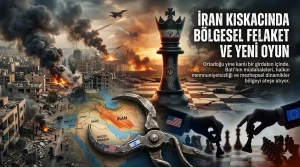
Today, similar questions stand before us: Is all this another phase of preparation? What is being designed for the long term? Are conditions being cultivated—globally, in Turkey, and particularly in the Middle East—to accustom societies to yet another form of despotism? Are chaos, repression, economic crisis, and polarization becoming pretexts for new practices?
Unless sound reason prevails and the consciousness of freedom and democracy is kept alive, it is inevitable that societies will become mere instruments of others’ long-term plans.



.